Sunday, October 10, 2021

Nina Simone: “Little Girl Blue” (1959/2021) CD Review


In June, Nina Simone’s The Montreux Years was released. That two-disc set captured live performances from 1968 to 1990, including renditions of a few songs from her debut album, 1959’s Little Girl Blue. Now that first album has been re-issued, with new liner notes by Daphne A. Brooks (also included are the original liner notes by Joseph Muranyi). It was mastered by Michael Graves at Osiris Studio in Los Angeles. The songs here are mostly covers, with just one original composition. But the way Nina Simone delivers them, it feels like every one of these songs is hers. Backing her are Jimmy Bond on bass, and Albert “Tootie” Heath on drums.

The album opens with a delightful rendition of Duke Ellington’s “Mood Indigo,” which moves at a good clip. When we think of Nina Simone, we usually think of her voice, but here she also reminds us what a talented pianist she was. It is nearly a minute and a half before she begins singing. And what a voice. I love the way she holds onto certain syllables. Even at this early stage in her career, she had that special something, and there is a natural flow that is all her own, and a confidence in every note. It must have been exciting in the late 1950s and early 1960s to come across this album when it was new. It is exciting even now, and of course this re-issue is the perfect starting place for anyone unfamiliar with her work and her style. She commands our attention at the beginning of “Don’t Smoke In Bed” with that brief introduction on piano, and then has us completely in her hands with her captivating vocal performance. This is one of the songs that is included on The Montreux Years, from a concert in 1990. As on that recording, this song is performed solo here. Nina Simone also released both “Mood Indigo” and “Don’t Smoke In Bed” as singles, and they were included on the 2018 compilation Mood Indigo: The Complete Bethlehem Singles.

Nina Simone's band members join her again for “He Needs Me,” a song written by Arthur Hamilton. In each song she delivers, there are certain words or lines that are striking because of the personal touches she adds. Here, for example, I love the way she delivers “or his lover” in the line “And I’m going to be his friend or his lover.” You can hear in her voice just exactly what she wants and what she plans. There are other moments that are more impressive, but sometimes it is just those little touches that really make the song something special. That’s followed by “Little Girl Blue,” the album’s title track, which begins with an instrumental nod to “Good King Wencelas,” a theme she returns to at other moments throughout the track. This is another song that was included on The Montreux Years, this song from a 1976 concert. The performance here is wonderful. This whole album is excellent, but this track is certainly a highlight.

Then Nina Simone starts swinging with her rendition of “Love Me Or Leave Me,” a song I used to see The Peak Show dip into on “O’Day.” This track is a lot of fun, and I love the way she delivers the lines “There’ll be no one unless that someone is you/I intend to be independently blue.” She also gives us some bright work on piano. And there is a cool bass line, which helps to make this track stand out. That extended instrumental section in the middle is fantastic. That’s followed by another totally fun track, “My Baby Just Cares For Me,” which was also included on The Montreux Years, from the 1990 show. What a delight this one is. She just completely owns this song. If it fails to put a smile on your face, it’s time to see a doctor.

“Good Bait” is the first of the album’s three instrumental tracks. It begins with some pretty work on piano. Then, approximately a minute and forty-five seconds in, the track takes a turn as the other musicians come in, and things get seriously cool.  It then returns to the piano solo before its conclusion. That’s followed by “Plain Gold Ring,” which Nina Simone begins a cappella. She takes us on a haunting ride here, the music swelling at times, then becoming wonderfully intimate at other moments, her voice coming from some other place, some other land that we’d love to step into if we had the nerve. She then delivers an instrumental rendition of “You’ll Never Walk Alone” that is moving and gorgeous right from its first moments, and shows what a fantastic pianist she was. That’s followed by an excellent rendition of “I Loves You, Porgy.” I’ve said it many times, but you can never go wrong with Gershwin. Nina Simone’s vocal performance pulls you closer and closer. The album concludes with its only original composition, a totally cool instrumental titled “Central Park Blues.” The bass is in command at the start, and remains a strong presence throughout. And Nina Simone’s playing is both sexy and joyful. In the second half she starts to rock that piano at one point, before quickly changing directions again, keeping us engaged and excited.

CD Track List

  1. Mood Indigo
  2. Don’t Smoke In Bed
  3. He Needs Me
  4. Little Girl Blue
  5. Love Me Or Leave Me
  6. My Baby Just Cares For Me
  7. Good Bait
  8. Plain Gold Ring
  9. You’ll Never Walk Alone
  10. I Loves You, Porgy
  11. Central Park Blues

This re-issue of Little Girl Blue was released on CD on August 13, 2021. It was also released on vinyl, both blue and black.

Saturday, October 9, 2021

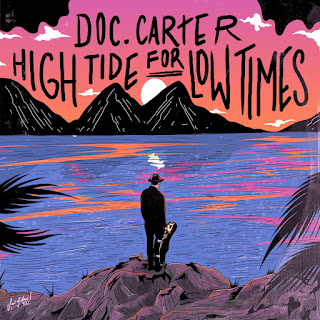
Doc Carter: “High Tide For Low Times” (2021) CD Review

It was the album’s title, High Tide For Low Times, which got me interested in the first full-length album from Doc Carter (he’s released several EPs and singles). That title just gets straight to how things feel these days, and hints at change in the near future. Doc Carter is a singer and songwriter currently based in Texas. This album features all original material written by Doc Carter. Joining the singer on this release are Jeremy Long on keyboards, dobro and pedal steel; David Leach on percussion; and Matt Grundy on all other instruments. Matt Grundy also produced the album.

The album opens with “Heading West,” its catchy groove and excellent work on harmonica right at the start immediately working to pull us in. Doc Carter’s vocals have a sound that is both friendly and experienced. Here are the song’s first lines: “I’ve been staring out this window for what seems an eternity/Looking for some kind of answers from all the people that I see/In this refuge from the cold, it’s just me that I deceive/I can’t stay a moment longer, I’ve got to set myself free.” And yes, heading west still holds that appeal, carrying with it that sense of pursuing one’s dreams. “How many years have passed me by, how many days have gone?/It’s time to pull myself together, it’s time to find a new dawn.” It’s never too late, and this song’s cheerful and positive vibe seems to urge us on. “Don’t try to stop, don’t try and stop me now/I’m a-heading west, and I’m going to get there somehow.” And I love that harmonica lead in the track’s second half.

“Taking It Easy” is also catchy in its own way, with that cool intro and rhythm. Here is a taste of the lyrics: “I got nowhere to go/Taking it easy/Taking it slow/Let these feelings/Come and go.” And of course there is something appealing about these lines: “There’s no need to worry/About impending doom/I’m taking it easy/Ain’t giving up soon.” We all need some encouragement these days, and this song provides it. That’s followed by “Stayed For Your Love,” a sweet song featuring some nice work on harmonica, and a gentle, loving sound that is incredibly appealing. “Call it luck or fate that brought me here/I followed the stars running away from my fears/There was no turning back, and no guidance from above/I came for your beauty, but I stayed for your love.” This is one of my personal favorites.

“High Tide For Low Times,” the album’s title track, begins with some percussion, a beat that echoes in a somewhat ghostly manner, setting the tone. “Life ain’t always easy/And it’s a struggle to win/Nothing is certain/Nothing’s for free/And the best thing I’ve got going/Is having you here with me.” Oh yes, those lyrics ring particularly true. The last couple of years have caused many of us to put things into perspective, and adjust our priorities. “I’m looking for good signs to come across our path/But it’s a high tide for low times.” This is a song for our times, to be sure, and it also offers us some encouragement in lines like “Do the best you can/Try to keep your head high/There’s no shame in hard luck.” Folks need songs that reach out to them, particularly in times when many feel estranged from society. “High Tide For Low Times” is followed by “Goldie,” a more cheerful number with a good rhythm. “It’s the times when we don’t quite know/What we’re looking for.” And I dig that work on electric guitar. Then “Vida Cana” is a pleasant number, a song that feels like a vacation, and if you close your eyes, it might just take you someplace warm and wonderful and relaxing. I like that work on pedal steel. This one was released as a single.

“Lucky” is another song of our times, with lines like “You know the world has changed forever, I’m afraid/And we can’t forget the price that’s been paid” and “The strain of this time has torn us all apart.” And these lines of course speak to us: “The troubles that we share won’t soon disappear/Into thin air/The end is still unclear.” And I appreciate the Shakespeare reference (in The Tempest, Prospero says “These our actors,/As I foretold you, were all spirits and/Are melted into air, into thin air”). This track also features a good instrumental section. Doc Carter then offers some advice in “Open Your Mind”: “Open your eyes, babe/Open your mind/Open your eyes, babe/It’s your time to shine/Don’t make excuses/And don’t tell no lies.” This heavier, rocking number features some good work on keys. In “Fallen Angel,” he sings, “Of all the angels I’ve known, why would I pick a fallen one like you?” This is a track that has grown on me.

“Wrapped Around You” is a bluesy number about trying to unravel the mystery of that special person, or at least trying to understand her. “Some days I think you love me, then you push me out your door/I can’t get my mind wrapped around you.” “Sunshine” is another that was released as a single, and has a pleasant vibe and a pretty sound, particularly that work on keys. That’s followed by “Pour The Wine.” Doc Carter’s voice is perfect for these sad, soulful songs. “You’ll be back again/I just don’t know when/You’ll come walking through that door/Pour the wine, I’ll spill my heart/‘Cause tonight I need a friend/For this broken heart to mend.” And toward the end, he tells us, “We got along just fine/Found our own way in time/But you never came back through that door.” There is something beautiful about this song, in part because of its honesty, and it is another of my favorites. Then “To The Sea” has an interesting, unexpected opening. This is another track that has grown on me, though I could do without the beach sound effects at the end. The album concludes with “Tomorrow,” a song about trying to return to life after this pandemic, and the urge many of us have to travel. It begins with these lines: “I want to jump a plane tomorrow/And see the world once again/Spent too much time in a bubble.” But of course the pandemic is not over, mainly because certain people refuse to get vaccinated. This song also touches upon all the misinformation out there, which of course has led to more deaths. “Most every source seems corrupted/Words less to inform than to enrage.”

CD Track List

  1. Heading West
  2. Taking It Easy
  3. Stayed For Your Love
  4. High Tide For Low Times
  5. Goldie
  6. Vida Cana
  7. Lucky
  8. Open Your Mind
  9. Fallen Angel
  10. Wrapped Around You
  11. Sunshine
  12. Pour The Wine
  13. To The Sea
  14. Tomorrow

High Tide For Low Times was released on August 13, 2021.

Friday, October 8, 2021

Nathan Bell: “Red, White And American Blues (It Couldn’t Happen Here)” (2021) CD Review

In 2016, the Republican Party for all intents and purposes, if not in name, became the Fascist Party, though the rank and file members claim to be completely unaware of the change. And though their master, Donald Trump, a whiny ex-gameshow host, is no longer in power, they seem to be still in thrall to him, leading others in positions of power to emulate him in order to remain relevant to the moronic masses. It is a terrifying moment in this nation’s history, particularly as the upcoming mid-term elections could spell disaster for democracy. This is a time when anyone who is paying attention has the Red, White And American Blues. The parenthetical part of the title for Nathan Bell’s new album, “It Couldn’t Happen Here,” is a reference to Sinclair Lewis’ 1935 novel It Can’t Happen Here, which tells the story of the rise of a dictator in the United States. That book was written as fascism took hold in Europe, but for most people there has been the belief that it just couldn’t happen here. That belief was essentially destroyed in 2016. Nathan Bell’s album was recorded in 2019, while Trump still occupied the White House, and though it was delayed due to the pandemic, the power and relevance of its songs have not lessened. The album features all original material, written by Nathan Bell. Joining Nathan Bell on these tracks are Alvino Bennett on drums and percussion; Frank Swart on bass, guitar, banjo, and electric mandolin; John Deaderick on keyboards; and Reverend Crow on harmonica. Special guests, including Patty Griffin and Regina McCrary, join Nathan Bell on vocals on certain tracks.

The album opens with “Angola Prison,” a driving, bluesy number with a strong pulse of a beat and some good work on harmonica, and a vocal performance that sounds of anger and pain, with a undeniable power. Here is a taste of the lyrics: “Chains that rattle with my every breath/Me and the devil/We made a pact/That I’d leave Angola Prison/Lying on my back.” That’s followed by “American Gun.” Gun violence in this country has gotten so far out of hand that it seems nothing can be done about it, and so nothing is done about it. The fact that no real changes came after Sandy Hook shows just how screwed up this country is when it comes to firearms. Most of us wonder, if not then, when? This year there have been more mass shootings than days, and we are getting used to the idea that anywhere at any moment gun violence could erupt. It is frightening and depressing, and Nathan Bell’s “American Gun” hits that mark well. This one is more in the folk realm, sung from the perspective of a gun, in the same vein as Ellis Paul’s “Autobiography Of A Pistol” back in 1994. “I’ve got one job and I do it well,” Nathan Bell sings here. Indeed. Patty Griffin joins Nathan Bell on vocals on this track.

The lyrics of “American Blues” are delivered almost as spoken word, and that approach gives this song a stronger sense of immediacy, like Nathan has to tell us this right now. The song deals with racism and other perennial troubles of this nation. Check out these lines: “The church rapes the children it is paid to educate/Not a day goes by in this country that I’m not a father with/The American blues.” There is some excellent guitar work on this track. Nathan Bell does a sort of spoken word delivery on the next track as well, “Retread Cadillac (Lightnin’).” Regina McCrary joins him on vocals for this one, offering delicious responses to what is being said. It is such a cool track. “You got to get down/Get back up again.” Patty Griffin joins Nathan Bell on vocals on “A Lucky Man,” which is both a beautifully sad song and a truly positive number. “Had a pocket full of dreams, but I tossed them all/Had a few good friends until I lost them all/I wish they were still here so I could tell them all/That I’m a lucky man.”

“Wrong Man For The Job” is a good solid blues song. In 2016, the entire Cabinet was filled by the wrong men and women. You couldn’t get much more wrong than Betsy DeVos for Secretary of Education, or Wilbur Ross for Secretary of Commerce. And Scott Pruitt to head the Environmental Protection Agency? Holy shit, talk about wrong. It seemed Trump was deliberately dismantling the country by choosing the absolute worst person for each position. Here Nathan sings, “If I was the President/I’d start another war/Wouldn’t care who we were fighting or what we were fighting for/And I’d take all of your money, slip out the back door/Because I’m the wrong man, I’m the wrong man for the job.” Then there is some humor to “When You’re Dead (Ghost Reflects On His Dire Circumstances).” Here is a taste of the lyrics: “When you’re dead/You can ignore the warning labels/And all the things you were afraid to do/You can do them now instead/Because nothing else can kill you/When you’re dead.” Ah yes, a song that reminds us of the great benefits of being dead. And it features more great stuff on harmonica.

I don’t think anyone is sane enough to own a gun, including myself. Any writer will tell you that if you introduce a gun into the plot, it will have to go off at some point. So if you buy a gun, eventually you will be compelled to use it. Or someone else will use it. The opening stanza of “Mossberg Blues” is: “I bought a shotgun just the other day/It leans in the corner of my room/And every time I pass that way/It says, man, we should shoot someone real soon.” This song has a very late 1960s or early 1970s Rolling Stones vibe. Regina McCrary joins Nathan Bell on vocals on this track. Then Aubrie Sellers joins him on vocals for “Running On The Razor (Family),” another powerful blues song. Check out these lines: “They were dumb motherfuckers/Exactly as they seemed/Thought they had the ticket/But it couldn’t be redeemed.” That’s followed by “Zensuit’s Samadhi Blues.” The opening lines stood out for me the first time I listened to this album, and strike me each time I play it: “Man’s born a pauper/Man’s born a prince/Came into the world screaming/He’s been screaming ever since/For somebody/Make everything work out right.” We are all trying to make sense of the world, aren’t we? There is something of King Lear in this song, particularly in that moment when Lear begins to take a more critical look at himself and realizes that he has not cared for the poor, and in that acknowledgement that everything can be so easily taken away.

“Monday, Monday (The Bony Fingers Reprise)” comes on strong with a great groove. It’s a blues tune about working and a lack of money. “Used to bring my money to my baby/Keep a little for myself/Now I’m working for the man/And the man is somewhere else.” These lines also stand out: “Work your fingers to the bone/‘Til bones are all that’s left of you.” Who hasn’t been thinking about death lately? And having those thoughts during the workday is, well, just too much to bear at times. Then Patty Griffin joins Nathan Bell again for “To Each Of Us (A Shadow),” a gentle and intimate song that seems to be about anxiety and helping someone cope with it. “And I’m standing at the lighthouse/With no keys for the locks/As you sail through the fog/Headed straight into the rocks/But you’re all I ever wanted/You’re all I ever wanted/You’re all I ever wanted/So I breathe out/And I breathe in/Count every breath from one to ten/Turn around/And count back down/Again.” It is one of those songs that reach out to us, help us through whatever this thing is, and it is one of my personal favorites. The album then concludes with “Folding Money (You Better Move Along),” a song that rips into those that profit from religion. “Jesus won’t hear you when you call/Or answer when you pray/Jesus won’t hear you when you call/You’d better move/Move along.”

CD Track List

  1. Angola Prison
  2. American Gun
  3. American Blues
  4. Retread Cadillac (Lightnin’)
  5. A Lucky Man
  6. Wrong Man For The Job
  7. When You’re Dead (Ghost Reflects On His Dire Circumstances)
  8. Mossberg Blues
  9. Running On The Razor (Family)
  10. Zensuit’s Samadhi Blues
  11. Monday, Monday (The Bony Fingers Reprise)
  12. To Each Of Us (A Shadow)
  13. Folding Money (You Better Move Along)

Red, White And American Blues (It Couldn’t Happen Here) was released on October 1, 2021.

Saturday, October 2, 2021

Buck Owens And The Buckaroos: “Ain’t It Amazing, Gracie” (1973/2021) CD Review

Buck Owens was fairly busy in 1973, putting out four albums that year.  Ain’t It Amazing, Gracie was released just a few months after In The Palm Of Your Hand, and featured mostly original material written or co-written by Buck Owens. It also contains the song “Streets Of Bakersfield,” which was written by Homer Joy, and was later a hit when Buck Owens re-recorded it with Dwight Yoakam in 1988. Randy Poe, in the new liner notes written for this re-issue, talks a bit about that later recording. This re-issue also includes the original liner notes, but no bonus tracks. The songs are presented in their original configuration, and the music has been mastered by Michael Graves from the original analog tapes. The band includes Don Rich on guitar, fiddle and backing vocals; Jerry Brightman on steel guitar; Doyle Curtsinger on bass and backing vocals; Jerry Wiggins on drums; and Jim Shaw on keyboards.

Ain’t It Amazing, Gracie opens with its title track, which was written by Buck Owens and Glen Garrison. It was also released as a single, the only single from this album. It’s a fun song, the title obviously a play on “Amazing Grace.” It’s also a love song, but slightly insulting as well, as we hear in these lines: “Well, she’s not the prettiest girl in the world/I know she’s not the smartest one too/But she’s always fair, and I know she cares/And I know her little heart is true/Well, ain’t it amazing, Gracie, how much that I love you.” There is something about that last line that makes me think she doesn’t deserve love, that that’s why it’s amazing he loves her so much. “It’s going to be a long hot summer,” Buck Owens sings at the beginning of the next track, “Long Hot Summer,” something that is always true here in Los Angeles. But of course with climate change, I suppose people can expect that wherever they might be. This is a slower number, and it includes a spoken word section: “Well, you say that you’re leaving/And that you ain’t coming back/And from the way things are looking/I don’t doubt it/Not one little bit.”

The story behind “Streets Of Bakersfield” is included in the liner notes of this new re-issue. When you think of the so-called Bakersfield sound, the first name that likely comes to mind is Buck Owens, so it still strikes me as strange that he didn’t write this song himself. But, no matter, it’s a good song. The lines I’ve always loved are: “You don’t know me, but you don’t like me/You say you care less how I feel.” This song was written by Homer Joy, who also released his own version as a single. It’s followed by a second song written by Homer Joy, “She’s Had All The Dreamin’ She Can Stand,” which obviously is the best song title on this album, and it’s one of the best songs. Check out these lines: “Chased our dreams endlessly/Through it all she stood by me/More than that, lord, she was such a friend/Dreaming’s all I had to give/She needed more to live/She’s had all the dreamin’ she can stand.” Such beautiful and sad lines, as are these: “But one by one, the dreams all died/And late at night I’d hear her cry.” These lyrics remind me of what could be the most depressing lines ever in a song: “For you will still be here tomorrow/But your dreams may not,” those from Cat Stevens’ “Father And Son.” I also love that work on fiddle on this track. “She’s Had All The Dreamin’ She Can Stand” is followed by “Your Monkey Won’t Be Home Tonight.” And yes, this one also has a great title. It’s a song about getting away from a woman who’s been treating him as some sort of pet or plaything. “You’ll find me strutting my stuff/Yes, I’ll be cutting the rug/Don’t wait up, because your monkey won’t be home tonight.” And how can anyone help but enjoy the line “Well, I may do some swinging, but it won’t be from a tree.”

“I Know That You Know (That I Love You)” is kind of silly, kind of sweet, and kind of sad. “You don’t have a care, and I don’t have a prayer/And I know that you know that I care.” I love the vocals on this track, including the backing vocals, which add some weight to the line “And I know that you know that I care.” That’s followed by “The Good Old Days (Are Here Again).” Here is a taste of the lyrics: “She’ll soon be back within my arms/Yes, back where she belongs/The lonely nights are gone for good/Like castles in the air.” This track features some really nice work on guitar and pedal steel. That change that first happens nearly halfway through always catches me by surprise, that section about the train, and I love it. It is what especially makes this song stand out. “Old Faithful” is another of the disc’s highlights, Buck Owens getting rather playful in this number about trying to finally end a relationship. “I’ve said this was the last time a hundred times before/And the next time that you called, I’d tell you off/I’ve promised me the luxury of showing you the door/Oh, I could hardly wait ‘til I could tell you to get lost.” But the song’s title ought to give you a clue about his success.

“When You Get Back From Nashville” was written by Bob Morris and Buck Owens. Today the sentence would be completed as “When you get back from Nashville, you’ll have to quarantine for two weeks.” Though I love Nashville (I had the best pancakes there), it’s just not a good idea to visit any of the so-called red states these days, not until they manage to wean their residents off of FOX News and get them vaccinated. Anyway, this is a sweet song about a musician returning home. It’s a song of love and support, and it features some wonderful backing vocals from The Ray Sisters. “So, darling, come home/And sing us your songs/‘Cause you’ll always be famous with me.” The album then concludes with “When You Get To Heaven (I’ll Be There),” which is a variation on the theme Buck Owens visited previously in “Sweethearts In Heaven,” and contains quite similar lyrics. Check out these lines: “Just inside the pearly gates/Darling, that’s where I’ll wait/When you get to heaven, I’ll be there/If I should go first and have to leave you/To face this life alone with all its cares/Darling, don’t forget you’ll find me waiting/To help you climb up heaven’s golden stairs.” Compare those to these lines from “Sweethearts In Heaven”: “If I should go first and leave you behind/To face life alone, bear this in mind/I’ll be waiting if heaven’s my fate/To take you by the hand just inside the pearly gates.”

CD Track List

  1. Ain’t It Amazing, Gracie
  2. Long Hot Summer
  3. Streets Of Bakersfield
  4. She’s Had All The Dreamin’ She Can Stand
  5. Your Monkey Won’t Be Home Tonight
  6. I Know That You Know (That I Love You)
  7. The Good Old Days (Are Here Again)
  8. Old Faithful
  9. When You Get Back From Nashville
  10. When You Get To Heaven (I’ll Be There)

This re-issue of Ain’t It Amazing, Gracie was scheduled to be released on October 1, 2021 through Omnivore Recordings, but it looks like that date was pushed back to October 29th.

Wednesday, September 29, 2021

Buck Owens And The Buckaroos: “In The Palm Of Your Hand” (1973/2021)

Omnivore Recordings has been re-issuing a lot of great music from Buck Owens. For the last month or two the focus has been on his late 1960s and early 1970s output, including a re-issue of the 1973 album In The Palm Of Your Hand, which was just one of four Buck Owens records released that year (there were four the previous year as well). Randy Poe, in the new liner notes written for this re-issue, talks about the great number of Buck Owens releases during that time. The re-issue is presented in the album’s original configuration, without any bonus tracks. It features nearly all original material written by Buck Owens, and the band includes Don Rich on guitar and fiddle, Doyle Curtsinger on bass and vocals, Jerry Brightman on steel guitar, Jerry Wiggins on drums, and Jim Shaw on keyboards, along with Buddy Alan on guitar, and Ronnie Jackson on guitar.

The album opens with its title track, “In The Palm Of Your Hand,” which was also released as a single. Buck Owens included an earlier version of this song on his 1966 album Open Up Your Heart. It’s a love song about a troubled relationship. Hey, sometimes you just can’t quit. “In the palm of your hand, that’s where you’ve got me/This loving you is messing up my mind/But try as I may, I just can’t stop me/You’ve got me right in the palm of your hand.” This track features some nice work on steel guitar and fiddle. That’s followed by “There Goes My Love,” a kind of catchy number in which Buck Owens sings about a woman he used to date. “There goes the reason that I sigh/There goes the reason that I cry/There goes the lips I used to kiss goodnight/There goes my love.” Then we get the only song on the album not written by Buck Owens, “Made In Japan.” It was written by Bob Morris and Faye Morris. The song’s title plays on a phrase that we used to hear a lot back in the 1970s, referring to cheap, shoddy merchandise (there was also a Deep Purple album with that title, which came out in 1972, the same year as Buck Owens’ single). This song, however, is not about something cheap, but rather about a beautiful woman he knew, taking our expectations and turning them on their heads. “The beauty of her face was beyond my wildest dreams/Like cherry blossoms blooming in the mountain in the early spring/As we walked by the river and she softly took hold of my hand/That’s when I fell deep in love with the girl made in Japan.” This song was also released as a single, and was a hit for Buck Owens, reaching #1 on the country chart.

“Sweethearts In Heaven” is a song that Buck Owens recorded first in 1956, releasing it on a single, and then again in the early 1960s, when it was included on his On The Bandstand album, and again later with Susan Raye. This, I suppose, is one of the ways he was able to release so many albums. Still, this is an excellent song, and I like the rendition included on this album. Its appeal might be in part because death has been on my mind lately. Here is a taste of the lyrics: “If I should go first and leave you behind/To face life alone, bear this in mind/I’ll be waiting if heaven’s my fate/To take you by the hand just inside the pearly gates.” Is there something after this life? No one knows. But when I think of never seeing my girlfriend again, I fervently hope there is something after. “Will there be sweethearts in heaven?” this song asks. That’s followed by “Arms Full Of Empty,” a fun song that was also released as a single, and, oddly enough, was used as the title track for another album, which was also released in 1973. Go figure. Collecting all the Buck Owens albums could drive one a little batty. Anyway, this is a wonderful song. Check out these lines: “Oh, you took my car and took my money/Done me wrong and that ain’t funny/Left me standing here, looking silly.” But the line that always stands out for me is this: “Well, I’m so sick and tired of getting up so sick and tired.” Ralph Mooney plays steel guitar on this track.

When I was born, Richard Nixon was president. Before that, in 1962 when he lost the gubernatorial race in California, he promised the nation he was done with politics, telling those gathered that it was his last press conference, that the press wouldn’t “have Nixon to kick around anymore.” Oh, if only he had been honest in that moment. Of course, since then the nation has had to suffer with Ronald Reagan, George W. Bush and Donald Trump, all of whom were worse than Nixon. But anyway, getting back to that “kick around” line, Buck Owens wrote a song titled “You Ain’t Gonna Have Ol’ Buck To Kick Around No More,” which was released as a single in 1972 and also included on this album. As you might guess, it’s another fun one, a lively song. “The last time was the last time, and this time it’s for sure/The next sound that you hear will be the slamming of the door/And you ain’t gonna have ol’ Buck to kick around no more.” This song was also included on the 2019 compilation The Complete Capitol Singles: 1971-1975. Then “A Whole Lot Of Somethin’” is another good song about the end of a relationship. “Well, I treated you the best that I knew how/But what have I got to show for all that now/I’ve got a broken heart, and that’s something you seem to lack/It’s going to take a whole lot of something to bring you back.” I love the work on fiddle.

“Get Out Of Town Before Sundown” is a country song about a run-in with the law. But this isn’t a tale of murder or robbery. No, lesser crimes are at the heart of the trouble, the first verse being about vagrancy and poverty. “He said, if you ain’t got no money and you ain’t got no job, boy, I’m placing you under arrest.” The second verse is about being with an underage girl (but don’t get all upset, the girl in question is 17, and he is unaware). “And if you’re not out of town before sundown, you won’t get out of town at all.”  That’s followed by “Something’s Wrong,” another great country song about a love that has gone wrong. “It’s hard to live each day when there’s nothing left to say/And there’s nothing left to say but something’s wrong/Something’s wrong when you no longer want to hold me.” And I love this harsh and depressingly straightforward line: “When the love of your life turns into a waste of time.” There is also more great stuff on fiddle. This is one of my personal favorite tracks. The album then concludes with “I Love You So Much It Hurts,” a lively love song about a questionable relationship. Others question his choice, and maybe they’re right, for he sings, “And if you do me wrong/I’ll still tag alone/Because I love you so much it hurts.”

CD Track List

  1. In The Palm Of Your Hand
  2. There Goes My Love
  3. Made In Japan
  4. Sweethearts In Heaven
  5. Arms Full Of Empty
  6. You Ain’t Gonna Have Ol’ Buck To Kick Around No More
  7. A Whole Lot Of Somethin’
  8. Get Out Of Town Before Sundown
  9. Something’s Wrong
  10. I Love You So Much It Hurts

This re-issue of In The Palm Of Your Hand is scheduled to be released on October 1, 2021 through Omnivore Recordings.

Tuesday, September 28, 2021

Grateful Dead: “Road Trips Vol. 2 No. 2: Carousel 2-14-68” (2009/2021) CD Review

Real Gone Music is continuing to re-issue the Grateful Dead’s Road Trips series, putting them out in the reverse order of their original release. Road Trips Vol. 2 No. 2 is a two-disc set containing the complete show the Dead performed at the Carousel Ballroom on February 14, 1968, along with four bonus tracks. Yeah, it wasn’t a long show, but it contains some fantastic stuff, and it was one of the shows recorded for use on Anthem Of The Sun.

Disc 1

The first disc contains the short first set, along with the bonus material, which comes from a few shows from early 1968. The show opens with “Morning Dew.” It might feel a bit faster than later versions, and the style of the keyboard work is quite a bit different too, yet this is a powerful version. The band at this time was less than three years old and still had that raw, unbridled power. This version might not bring tears to your eyes as this song was sometimes capable of doing, but it does pack a punch. They follow that with “Good Morning Little Schoolgirl,” with a great bluesy vibe and some nice work from Pigpen on harmonica right at the beginning. They always said Pigpen was the band’s leader at this time, and a track like this is certainly evidence of that being true. He delivers a great vocal performance, with a bit of that riffing he was known for. But it’s his harmonica playing that is the draw here, and I especially love that section where the harmonica is interacting with the guitar.

There is a bit of stage banter before the band goes into “Dark Star.” Yes, a first set “Dark Star.” The song was new at that point, but it was already something special, as we can tell by Bob Weir saying they were going to blow it on the first set instead of saving it for the second set, which was to be broadcast on the radio. This too feels a bit fast, a bit rushed, particularly the first verse, but is of course interesting. I’ve never heard a dull “Dark Star.” And though this version is short, it still contains some exploration. Hell, every moment of this song feels like exploration, doesn’t it? It leads straight into a wild “China Cat Sunflower.” Wow, the boys are really rocking this one between verses, with Jerry Garcia’s guitar seeming able to shoot through concrete walls and moons and whatever else might be nearby. This is a fantastic, unhinged rendition, and it segues perfectly into, not “I Know You Rider,” but “The Eleven.” This is phenomenal. Why didn’t they do this more often? The energy is tremendous. This is the first set? It must have been something to see the Dead at that time. “The Eleven” leads straight into “Turn On Your Lovelight” to conclude the first set, Pigpen getting another opportunity to show what he could do. The band is cooking, determined to push this fireball right through the gates of heaven and beyond, taking the angels and whoever along with them, a dancing, pulsing, swirling mass of legs and arms and smiles.

The bonus material begins with an excellent version of “Viola Lee Blues” from January 20, 1968. The vocals are a bit muddy at the beginning, but the energy is high right from the start. This one becomes an incredible jam, and Phil Lesh in particular is really delivering here. Then we get a couple of songs from January 23, 1968. The first is “Beat It On Down The Line,” and there is some banter about how many beats will start the song. They decide on seventeen. This track also has a lot of energy, and is one of the most fiery renditions I’ve heard. The second song from that Seattle show is a cover of “Hurts Me Too,” with Pigpen delivering the blues. The last of the bonus tracks is “Dark Star,” recorded February 2, 1968 in Portland, Oregon. And, again, there just are no dull versions of “Dark Star.” Throughout this entire disc, you can hear how excited the band was at this time to be making music. This version of “Dark Star” has a surprisingly gentle conclusion.

Disc 2

As the second set starts, there is some stage banter, including Jerry’s dedication of the set “to the memory of Neal Cassady.” They kick off the set with “That’s It For The Other One,” which includes “Cryptical Envelopment,” which was dropped in later years. This was the first show the Dead played after Neal Cassady’s death, and so the line “There was Cowboy Neal at the wheel of the bus to never ever land” carried a lot of weight that night. If you’ve never seen footage of Neal Cassady, I highly recommend checking out some of the Merry Pranksters’ footage. He was a character like no other, and was the inspiration for Dean Moriarty in Jack Kerouac’s On The Road. “That’s It For The Other One” leads straight into “New Potato Caboose,” an interesting song that the Dead kept in rotation only in the late 1960s. And here the band jams on it. That’s followed by “Born Cross-Eyed,” another cool song that was played only briefly in the Dead’s career (only in 1968), but a song I’ve always loved. It’s a short tune, just a couple of minutes, and it leads into a jam, where the band really starts to reach out into the strange, venturing into “Space” territory where they know intuitively how to thrive. Here darkness is shaped into people who march out of the void carrying spears of light. Soon they are separated, each on its own, just as we are, reaching out for scraps of light and spinning away from a center that may just be illusion after all. But if we all concentrate on the illusion, it will become solid form and draw us all toward it.

There is a bit of goofing around before the band launches into “Alligator,” the vocals at first seemingly swallowed up by the instruments. This version seems a bit chaotic at first, but that great drum section seems to pull things together. And the band just jams after that, clearly everything working right. And then they call out, “Alligator, alligator!” But that doesn’t mean the jamming is over. It leads into “Caution (Do Not Stop On Tracks),” which is a great jam in itself. Again, Pigpen’s vocals seem low in the mix at first, overpowered by the instruments. Things get a little out of hand as the band segues into “Feedback,” different parts of the engine seemingly at odds, but soon that becomes the norm, and the machine itself has dissolved, or morphed into something else entirely, its original goals and functions lost in the ether. And now it just Is, you know? It breathes and desires and inquires and investigates, growing with each bit of information it acquires, until, really, what else is there? The band then returns us to earth with the encore, a cover of “In The Midnight Hour,” to get us all dancing.

CD Track List

Disc 1

  1. Morning Dew
  2. Good Morning Little Schoolgirl
  3. Dark Star >
  4. China Cat Sunflower >
  5. The Eleven >
  6. Turn On Your Lovelight
  7. Viola Lee Blues
  8. Beat It On Down The Line
  9. Hurts Me Too
  10. Dark Star

Disc 2

  1. That’s It For The Other One >
  2. New Potato Caboose >
  3. Born Cross-Eyed >
  4. Spanish Jam
  5. Alligator >
  6. Caution (Do Not Stop On Tracks) >
  7. Feedback
  8. In The Midnight Hour

Road Trips Vol. 2 No. 2: Carousel 2-14-68 was released on August 13, 2021 through Real Gone Music.

Monday, September 27, 2021

Brief Notes On New Jazz Releases

As more people get vaccinated and concert venues open their doors once again, some sort of normalcy seems within reach. Meanwhile, artists are continuing to release excellent music to help us through these strange times. Here are notes on a few new jazz releases you might want to check out.

David Finck: “BASSic Instinct” – Bassist David Finck gives us a playfully titled album, a sequel of sorts to his 2019 release, BASSically Jazz. Here he offers some standards and some original material. The album open with its title track, one of the original compositions by David Finck, and as you might imagine, it’s an enjoyable and light number. It features Ryan Quigley on trumpet, Andy Snitzer on tenor saxophone, Mike Davis on trombone, Quinn Johnson on keys, and Teo Lima on drums. It is approximately a minute before David Finck takes his lead on bass. With that title, I expected that would come even sooner. But this isn’t a showcase for the bass, but rather a pleasant ensemble piece. That’s followed by a wonderful rendition of Irving Berlin’s “The Best Thing For You (Would Be Me),” performed by the trio of David Finck on bass, Tedd Firth on piano and Eric Halvorson on drums. I love David’s lead on bass here, and the way Tedd Firth adds light touches on piano during it. And check out that playful touch David adds just before the end during the brief drum solo. One of the more surprising choices is “Theme From ‘Mannix,’” this cool version featuring Bob Mann on guitar, as well as some really nice work from Cliff Almond on drums. Another highlight is the beautiful “Seascape,” which David Finck performs as a duet with Meg Ruby on piano. Meg Ruby also shines on “Tico Tico No Fubá,” one of my personal favorites, in part because of the delightful way it moves. Three tracks on this album feature vocals. The first of these is “Bateu, Levou/Who’s Wrong Or Right?” with Téka Penteriche and Trist Curless. “You rant and rave and overanalyze/You want a war/Who needs those anymore?” And the presence of vocalists does not mean a lack of a good lead on bass, for in the second half of this track David Finck certainly delivers. Kelly Mittleman provides the vocal work on “So What,” a track that also features some nice work on saxophone. Then Melissa Errico sings on “I Remember,” which was written by David Finck and Jack Murphy, a gorgeous track to conclude the album. This album is scheduled to be released on October 1, 2021.

Alexis Parsons: “Alexis” – Vocalist Alexis Parsons works with two trios on her new album, Alexis, delivering warm and personal renditions of some beloved standards. She opens the album with Cole Porter’s “Easy To Love,” backed by David Berkman on piano, Drew Gress on bass, and Matt Wilson on drums. She eases into the song, this rendition having a wonderfully intimate late-night vibe, and she completely sells us on this love that should be. With that same trio, she then gives us “I Didn’t Know What Time It Was,” written by Lorenz Hart and Richard Rodgers. I love how she is totally in the moment, seeming to live the song. This track also features a good bass solo.  Because she fully inhabits each song, it means a different vocal approach depending on the track’s mood, so in “Spring Can Really Hang You Up The Most” we hear a different sound from her. That one also features a rather unusual, gentle drum solo. Then with the trio of Arturo O’Farrill on piano, Jonathan Gilley on bass, and Willard Dyson on drums, she tackles Franz Schubert’s “Organ Grinder.” This track features some moving work on bass, and then there is a surprising section in the second half with some of the lines delivered almost as spoken word, with an improvised feel. With that same trio, she sings “Summertime.” I’ve said it often, but you can never go wrong with Gershwin. And this trio delivers a version that is unusual right from its opening, creating a strange atmosphere from which Alexis Parsons’ voice emerges. It is a different sort of summer in these musicians’ hands. This is a fresh approach that is captivating. The album opened with a Cole Porter song, and it likewise closes with one, “In The Still Of The Night,” featuring the trio of David Berkman, Drew Gress and Matt Wilson. This one also has a gorgeous and intimate sound, coming from those hours so late that time seems to have stopped entirely. This album is scheduled to be released on October 1, 2021.


Jackson Potter: “Restless”
– Guitarist Jackson Potter’s debut album features mostly original compositions, beginning with “Bird Flu,” an energetic piece that contains some delicious leads on piano and guitar and saxophone, and seems to be in constant motion. What is exciting about this piece is that during a lead the other musicians do not settle into the background waiting their turns, but keep up their own energy and fantastic work. The band is made up of Patrick Leavy on bass, Gibb Mandish on drums, and Leo Folsom on piano, with David Mason on alto saxophone, Joey Curreri on trumpet, and Carter Key on tenor trombone. “Bird Flu” is followed by “Falling Grace,” one of only two covers, this one written by Steve Swallow. As with the opening track, there is a strong sense of movement here, particularly in Jackson Potter’s guitar work, which seems to flow and dance. Then “Mulberry Tree” has a pleasant and warm, nostalgic vibe. “Sophia’s Waltz” has a sweet, gentle sound, a love song that will bring to mind that special person in your life. Then “Amalfi” features some really good work on drums, particularly toward the end. The album’s second cover is Horace Silver’s “Peace,” which begins with a pretty guitar solo, and features a wonderful lead on bass. That’s followed by “Hindsight Is 2020,” which was written during the pandemic. And though 2020 is technically in the past, the pandemic certainly isn’t, and most of the events and effects of last year are still with us, and so this track doesn’t really look back, but captures the current mood. It features some great work on drums, as well as from the horn section. The album concludes with “Restless,” which comes as a surprise, Jackson Potter turning to more of a rock guitar sound at the beginning. Before long, this track commands your attention. This album is scheduled to be released on October 8, 2021.

The Scenic Route Trio: “Flight Of Life” – With a name like Scenic Route Trio, you can expect this group of musicians to play music that will lift your spirits. And indeed, with the album’s very first track, “The Optimist,” they do so. That opening track has a wonderfully cheerful vibe. It might be enough to make an optimist of the most cynical among us. And certainly the world is in need of some optimism, some spirit. The trio is made up of Javier Santiago on piano, Ollie Dudek on bass, and Genius Wesley on drums, and all three deliver some delicious and delightful work here. This is the kind of track you just want to go on and on, so that you can remain in a good mood. It, like all the tracks on this album, was written by Ollie Dudek. Then “Flight Of Kawan” has a somewhat more relaxed, pleasant vibe at first, and still carries a great amount of joy to the listener. Soon it feels like each musician is dancing with his instrument, just the sort of thing to get us through the bad days. Things then get mellower with “Children Of The Sun,” which features some beautiful work on piano. I wasn’t sure what to expect from “Pandemia,” a tune which is obviously inspired by, and reflects, these crazy times, and indeed it goes through different sections, much as we’ve run through a wide array of emotions the last couple of years. I especially like the livelier sections of this track, the more joyous moments, and of course the drum solo. “Dreamscape” begins in a pleasant, welcoming place, and feels partially like memory, partially like desire. And soon it feels that are much more active within this place. “Lover’s Quarrel” is a fun track, much more enjoyable than any lover’s quarrel I’ve ever had, and it features a great drum solo. The album concludes with an alternative take of “Children Of The Sun.” This album was released on September 18, 2021.

Cathy Segal-Garcia: “Social Anthems Volume 1” – Certain songs from the past seem to address present troubles. Or perhaps those troubles never went away. Jazz vocalist Cathy Segal-Garcia presents her own renditions of a few of these songs on her new album, beginning with Buffalo Springfield’s “For What It’s Worth,” a song that has popped up a lot lately, especially after the police’s response to Black Lives Matter protests, and after authorities attacked peaceful protesters in D.C. so that the orange conman could pose with a bible. Cathy Segal-Garcia’s rendition is thoughtful and soulful, and features some nice percussion by Lorca Hart. Listen to the powerful and pointed way she delivers the lines “What a field day for the heat/A thousand people in the street/Singing songs and carrying signs.” There is also an excellent instrumental section. That’s followed by “What Are We Gonna Do,” the album’s original composition by Cathy Segal-Garcia. The song has a gentle feel, but in it she asks some big questions, including how we are going to justify the human race. “How do we recognize what’s wrong and make it go right?” I think we’ve got a handle on the first part of that question, but not the second. This song features some wonderful work on guitar. When I think of artists who have written social anthems, I don’t usually think of Billy Joel, though his “Goodnight Saigon” and “Allentown” address important topics and are seriously good songs (it is best to forget the awful “We Didn’t Start The Fire”). The song of his that Cathy Segal-Garcia covers here is “And So It Goes,” from Storm Front, and she delivers a touching rendition, joined on vocals by Paul Jost. She also delivers a cover of Peter Gabriel’s “Down To Earth” that features a fantastic instrumental section. One of my favorites is her take on “Get Together,” which she combines with “Can’t Find My Way Home,” an interesting choice. Her vocal work grabs us right from the introduction, and is at times haunting, as on the lines “We shall surely pass” and “We are but a moment’s sunlight/Fading in the grass.” And all the musicians really shine on this track. The album concludes with Marvin Gaye’s “Save The Children,” with Mon David joining her on vocals. This album was released on September 17, 2021.