Wednesday, October 26, 2022

Bob Weir & Wolf Bros. at The Greek Theatre, 10-25-22 Concert Review

Bob Weir & Wolf Bros. playing "Ramble On Rose"

I love that Bob Weir can still, after all these years, surprise us by approaching the Grateful Dead material in fresh ways. I had seen Bob Weir & Wolf Bros. in concert only once before, back in 2018, and that was when the group was just the trio of Bob Weir on guitar, Don Was on bass, and Jay Lane on drums. Obviously, with the addition of keys (Jeff Chimenti), pedal steel (Barry Sless) and a string and brass section, things were going to sound different. But I wasn’t quite prepared for how much those musicians affected the approach to these familiar and beloved tunes. And last night at The Greek Theatre in Los Angeles, the group was also joined by a few special guests, including Matthew Kelly on harmonica. The music, particularly during the second set, sounded absolutely fantastic. And while I was a bit sad to hear that Dead & Company are calling it quits after next summer’s tour, if that means more shows with the Wolf Bros., then for me it’s very good news.

The Greek Theatre, by the way, for those who haven’t been there, is a fairly relaxed venue. There was no hassle getting in. My friend Jon and I just walked right in, having only to take our keys and phones out of our pockets before walking through the metal detectors. No one was demanding to go through my pockets. The staff was incredibly friendly. What a great contrast to the fiasco at Dodgers Stadium this summer, when some folks spent the entire first set in line due to the actions of the security people at the gates. It was a cool night in Griffith Park, and I was glad I brought a jacket, though its initial purpose was housing all the goodies I was taking in. The show was scheduled to start at 7 p.m., and a little after 7 the first of the two edibles I had taken kicked in, so I was ready.

Set I

At 7:18 p.m. the house lights went out, and the band took the stage. They kicked off the show with “Ramble On Rose,” easing in, feeling no rush, no hurry. There wasn’t a whole lot of energy, but that was all right. On “Take you to the leader of the band,” the lights bathed the audience, because, hey, we’re all part of this. There isn’t a real leader. Anyway, the music was all slow and steady, until Jeff Chimenti started delivering some nice stuff on keys, and then things began to pick up. Thanks, Jeff! The song also featured a sweet closing moment. Bob followed that with Bob Dylan’s “She Belongs To Me,” featuring some gentle, pretty work on pedal steel. It was an easygoing rendition, the pedal steel really helping to set the tone. At the end, Bob repeated, “She can take the dark out of the nighttime.” Then the band began “Good Morning, Little School Girl,” which had a very different feel from the beginning, a different groove, a different vocal approach than what we’ve been used to from the Dead. My friend Jon commented that it was closer to the original rendition by Sonny Boy Williamson.  It took a moment to get used to, but it was good. Again, I love that Bob Weir is shaking things up. The tune featured a nice jam. That was followed by “Brown-Eyed Women,” which had a sweet vibe, and included some nice harmonies. And there was more good work on keys, Jeff seeming ready, or eager, to drive forward into wilder territory. Of course, it was still early in the night. But this was a good version of “Brown-Eyed Women.”

The horns and string players then joined the group, and they went into “West L.A. Fadeaway,” which had a seriously cool and jazzy intro. A slight lyric flub got the audience cheering and laughing, particularly as when Bob caught himself, the next word he sang was “mistake.” This song was when things started to get interesting, when they started to get really good. I love that moment when Bob held onto that note on guitar, letting it trail off before the “I had a steady job” verse. Also, Matthew Kelly delivered some great stuff on harmonica. This song started to strut about, taking control. And all the lights turned red on “Little red light on the highway,” and green on “Big green light on the speedway.” At some point, a kid joined the group on guitar, though I didn’t really notice him until they were getting ready to go into the next song, which was “Eyes Of The World,” always one of my favorites to see performed live. The horns helped ease into it, and everything felt great. There has always been a wonderfully jazz feel to this song, so the horns were right at home. The kid delivered a really good guitar lead. Yeah, maybe it got just a bit raucous for this song, but everybody was digging it, cheering him on. And the music grew from there, soon leading into the song’s second verse. After that verse, there was a delightful lead on saxophone, which became beautiful at moments, and Bob added a vocal part, repeating “Wings a mile long.” It was then that the kid started singing. Now at the time, no one near me knew who this kid was or what the song was that he started singing, and during the set break it was a topic of conversation among everyone in my section. No one knew, but everyone agreed he could play guitar, though his vocal work left something to be desired, particularly when he tried to belt out some of the lines. Part of the song he delivered as a rap, which kind of killed the mood established by “Eyes.” Well, it turns out the kid is Matty Michna, and the song was “Big Sandy Creek,” which he wrote the music for, but which features lyrics by none other than Robert Hunter. So there you have it. Some nice stuff on trumpet led us back into that groovy territory, and then Bob Weir began to sing Marvin Gaye’s “What’s Going On.” The line “war is not the answer” received a cheer from the audience. There was a great trombone lead, and then some excellent work by Mads Tolling on violin. That led to the third verse of “Eyes Of The World,” with Bob singing “Sometimes the songs that we sing are just songs of our own” rather than “Sometimes the songs that we hear are just songs of our own.” There was a cool, quirky jam, driven by the horns. And that’s how the first set wrapped up. It ended at 8:32 p.m.

Set II

Set break gave us enough time to use the loo and then get to know some our neighbors, and for me to appreciate those blue lights behind the audience, shining on the trees which seemed to enclose us. And then at 9:04 p.m., the band came back out on stage. It was cooler, and Bob now wore a jacket. So did I. And as they began “Shakedown Street,” I realized that John Mayer was now on the stage, and there was the feeling in the air that things were about to get pretty damn good. The second set, after all, was usually where the magic was at any Grateful Dead-related concert. And this rendition of “Shakedown” featured a fun jam. The energy was there at this point, I’m sure in part because of John Mayer’s presence. And because of the harmonica work, it got kind of bluesy for a bit. But it was that work on trumpet that really propelled things to a higher place, this version getting super jazzy because of the horns. The jam felt like it was knocking on the back door to some other realm, and soon the guys were delivering the “poke around” vocal jam, which was cool. That led directly into “Dark Star,” which meant it was time for some serious exploration. And with the horns, there was possibility of being led into some new lands. Who knew what doors those musicians might open? At first what they seemed to be doing was adding more force to the overall venture, and to each step. It was John Mayer, when taking a lead on guitar, who seemed to be the first to want to take larger strides into strangeness, and soon after that we got the first verse of the song. Pink and blue pinwheels were spinning as we eased out past the last recognizable sign posts, elongated creatures waving hello to us, while the notes spiraled around our dancing bodies. And did we drift too close to a supreme element of chaos? Something perhaps twisted, but not dangerous. Not dangerous to us, anyway. And then we were back in familiar territory, yet also beyond it, as the creatures had now joined us, adding their strengths to the groove, making it solid and fuller.

The band then slid into “China Cat Sunflower,” the presence of horns making this song’s intro just so damn good. There was an interesting hook with the horns, and the jam had a great vibe about it. Of course, that led straight into “I Know You Rider,” the group jamming on the groove for a while before delivering the first verse. That section featured some wonderful work on violin. When they got to the “northbound train” lines, it began to sound like a train barreling down upon us, until we realized that we were the fucking train. This thing was growing, building in power, until it was a roaring, dancing beast. And soon all of us were singing together, which had a sweet vibe, for a strong finish to the song. The band then eased into “The Other One” rather than thundering into it.  It had a relaxed vibe then, not a hint of that ominous beast that often emerges, but rather a cool, jazzy atmosphere. Still, they were exploring, finding new paths within the groove, and beginning to reach out, and before we knew quite was happening, we were in that magical land. Then suddenly, there was an explosion. Holy moly, we didn’t see that coming. And the band was really into “The Other One” at that point, into the growling, rowdy heart of the thing. So why not ease into the first verse? The horns were like detectives from 1930s stories finding themselves in science fiction territory, demanding entry to the spaceship and getting it. Oh, that trombone! Where is it taking us? It seemed to be calling out to the monsters, gaining us safe passage through their territory, their strange waters. Still, we should be cautious, right? No? Okay, then. The violin led us to prettier places, and then farther into weirdness, signaling it was time for the song’s second verse. There was an odd finish to this rendition.

After a little bit of guitar work, Jeff Chimenti delivered a pretty, gentle piano solo, with even some romantic tones, another sweet surprise. Just when I was beginning to get Vince Guaraldi’s “Cast Your Fate To The Wind” in my head, Jeff led the group into “Standing On The Moon.” And this was an incredibly sweet and thoughtful rendition, sans horns. The “coast of California” line got a cheer. This rendition featured some nice pedal steel work, and seemed to grow in both beauty and power. Toward the end, there was some wonderful, passionate playing by John Mayer. That led into “Sugar Magnolia” to close out the second set. That song choice indicated the band was determined to leave us in a good place. The horns were back, and the jam had a ton of energy. I particularly loved the work on violin. During the “Sunshine Daydream” section, the cello was spun around. It was a rousing, exciting and joyous rendition. The second set ended at 10:40 p.m., and the band was back a minute later for the encore, “Ripple,” my favorite song. Both John Mayer and Bob Weir played acoustic guitars, and Bob sported his hat for this one. The show finished at 10:48 p.m.

Set List

Set I

  1. Ramble On Rose
  2. She Belongs To Me
  3. Good Morning, Little School Girl
  4. Brown-Eyed Women
  5. West L.A. Fadeaway
  6. Eyes Of The World >
  7. Big Sandy Creek >
  8. What’s Going On >
  9. Eyes Of The World

Set II

  1. Shakedown Street >
  2. Dark Star >
  3. China Cat Sunflower >
  4. I Know You Rider
  5. The Other One
  6. Standing On The Moon >
  7. Sugar Magnolia

Encore

  1. Ripple

"I Know You Rider"

Tuesday, October 25, 2022

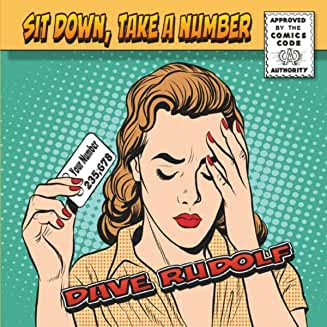
Dave Rudolf: “Sit Down, Take A Number” (2022) CD Review

Some folks really took advantage of the extra time they found themselves with during part of the pandemic. Singer and songwriter Dave Rudolf, for example, recorded four albums. Though, really, while that might be a serious feat for a normal person, it seems to be about on par for Dave Rudolf regarding output. After all, this is a guy who has released more than forty albums during his career. What’s really remarkable about that, however, is that the music is consistently good, even as he journeys into different musical realms, trying new things. His latest release (though how can I be certain he hasn’t released another album while I’ve been typing this?) is Sit Down, Take A Number, and it features all original material. That’s right, this artist didn’t just record four new albums of covers, but wrote a whole lot of new material. And this disc contains an hour of music. How does he do it? Clearly he has made some sort of pact with a powerful demon. Well, good for him! And good for us too! Dave Rudolf provides lead and backing vocals, and plays acoustic guitar, electric guitar, and percussion on this album. Joining him on this release are Dan Peters on guitar, Jim Widlowski on drums and percussion, Thomas Linsk on keyboards and organ, John Chorney on keyboards and organ, Jack Whittle on guitar, Wally Hustin on bass, Gary Victorine on pedal steel, Harry Garner on harmonica, Al Joseph on violin, Michael Hesiak on saxophone, Tim Bales on trumpet, and Lauren Dukes on backing vocals.

This album opens with a cool, soulful number titled “Slow Burn.”  In this sweet song, he sings “Everything I ever wanted is here/You’re in my arms, I know my future is clear.” Oh yes, even when everything else falls apart, it’s somehow okay as long as we’re with that special person. And sometimes we have to marvel at our good fortune. “I can’t believe that your heart’s next to mine.” This track features some good work on sax. That’s followed by “The Other Side,” which features some great, jazzy guitar work at the beginning, and again during that wonderful instrumental section in the middle. In addition to that phenomenal work on guitar, this track includes some really nice stuff on keys. For this track, Dave Rudolf’s vocals have a smoother quality. “Do we ever know another story?/Do we ever glimpse the other side of life?”

“Sit Down, Take A Number,” the album’s title track, is a total delight, with a delicious old-time jazz sound, a sound that instantly raises one’s spirits, even before that horn comes in. “I know I’m not perfect,” Dave Rudolf sings at one point in this song, but this track seems as close to perfect as something can get. I love those backing vocals. “Sit down, take a number if you’ve got a complaint/Sit down, get in line, ‘cause you know I’m no saint.” There is also some wonderful work on both keys and violin. The pandemic has certainly made a lot of us want to escape to another time, and this track will aid you in your flight. It is then followed by “Second Best,” which has a sweet, friendly, intimate sound. There is a gentle beauty to this love song, and though there is humor to his declaration, he is in earnest as he sings, “I’m not your Prince Charming/I’m not the man of your sweet dreams/I’m not the first you would request/But I will be your second best.” Something about this song got right to me. I love the honesty of it, the heartfelt and true feel of it. Dave Rudolf then totally changes gears with a rocking number, “Rock Until You Drop.” This one has a straight ahead rock sound and energy.

“Choices” has a friendly, positive sound, and features some nice work on pedal steel. Here is a taste of the lyrics: “They’re filling up your ears/With their judgments and fears/No matter what it takes/The choice is yours to make.” A good message to keep in mind, eh? Then “Mind Your Manners” has a heavy blues vibe, featuring some strong work on harmonica. “Seems these days in these times of troubles/There are folks who have lost their way/Listen to the snake oil salesmen/Believe in lies put on display.” Oh yes, this is a song for these crazy times. I foolishly thought these times would be on their way out once that previous resident of the White House was on his way out. But so many people are still eagerly purchasing the snake oil and swallowing the lies. That’s followed by “Time To Leave,” which has a lighter feel, more in the pop realm. It describes the end of a relationship, one that hasn’t been particularly volatile or harsh, one that doesn’t end with relief. After all, these people still seem friendly and loving toward one another. Sometimes things just end. “We know that we love each other/But something is wrong/How can the fire burn out/When it raged so strong/It’s not a single moment or a word spoken in spite/It’s just we don’t feel we need to keep up the fight.” There is something sweet, but also terribly sad, in this line: “I will never regret the time spent here in your arms.”

“Stepping Up In Class” is a number in which he brags about his girl. All in good fun, of course. He suspects others are jealous and that they wonder just how he ended up dating such a beautiful woman. He surmises they are thinking things like “What kind of potion did I put in her drink” and “There must be something wrong with her mind.” And these lines make me think of my relationship: “She’s like a goddess, a girl of your dreams/I make her happy, as absurd as it seems.” This track contains some really nice touches on horns. That’s followed by “Spend Some Time Together.” When the Rolling Stones performed “Let’s Spend The Night Together” on Ed Sullivan’s television program in 1967, they were asked to censor the suggestive title line, and they, sadly, agreed, with Mick singing “Let’s spend some time together.” Ridiculous. Well, Dave Rudolf’s “Spend Some Time Together” is a lighthearted and sweet number about taking some time to appreciate their relationship and not getting caught up in whatever troubles are bothering the world. “Let’s let the world drift by us/For just a little while/All of my troubles seem small/Whenever you start to smile.” “So Long” is another lively number, featuring some delicious work on keys and harmonica.

That cool saxophone part sets the tone at the beginning of “Something New,” promising good things to come. That instrument has a classic vibe here, and helps to keep things hopping. “It’s such a hard year, the work and the stress/And her personal life is in such a mess/She needs to leave her troubles far behind.” Yeah, I think we can all relate to those lyrics. On this track, he also delivers this line: “It’s long overdue, this night on the town.” That is certainly a line from the pandemic. It’s still weird going out, isn’t it? Last week I went to a bar for the first time in more than two and a half years, and it was strange. It took a bit of time for me to relax, and catching live music at a bar is something that I usually did in order to relax. That is how topsy-turvy things have become. Then “Step Aside” has a bluesy rock sound.

“It Could Be Worse” is another song that speaks to us in these strange times. The title line is something my girlfriend has been saying a lot lately, a necessary reminder to not get too upset about current troubles and problems. She often adds that other people have it worse. Of course, saying “It could be worse” is not saying things are good, just that they’re not as bad as they could be. Sometimes that’s the best we can hope for, I suppose. But this song has a brighter sound and feel than that. “If you look for the darkness, you will miss all the light/And your dreams will never take sail.” These lines also stand out for me: “This universe/It is not perverse/It’s not a curse/It could be worse/So much worse.” That’s followed by the last of the album’s original numbers, “In The Wind.”  “Just give in, enjoy the ride/And hope your sanity survives.” The album then concludes with its only cover, a pretty and heartfelt rendition of “The Water Is Wide,” featuring a good vocal performance, as well as some nice work on both keys and violin.

CD Track List

  1. Slow Burn
  2. The Other Side
  3. Sit Down, Take A Number
  4. Second Best
  5. Rock Until You Drop
  6. Choices
  7. Mind Your Manners
  8. Time To Leave
  9. Stepping Up In Class
  10. Spend Some Time Together
  11. So Long
  12. Something New
  13. Step Aside
  14. It Could Be Worse
  15. In The Wind
  16. The Water Is Wide

Sit Down, Take A Number was released on May 3, 2022.

Monday, October 24, 2022

Ernesto Cervini: “Joy” (2022) CD Review

The first thing that drew me to the new album from drummer and composer Ernesto Cervini was its title, Joy. It is something most people I know are seeking these days, and taking wherever they can find it. It seems to be lacking in a lot of areas. In politics, certainly, but also in online social arenas, on the road (I used to find great joy in just driving), and even in social contexts (due, in some part, to the pandemic). Where I most often find it is in music. The tracks on this album were inspired by a series of detective novels by Louise Penny, set in the fictional town of Three Pines. Having not read those books, I find the music creates its own worlds and characters for me, clear and vibrant, and invites me to take part. Of course, having now heard this music, I am curious about the writer’s work that inspired it. On her website, Louise Penny says the themes of her work were inspired by lines from W. H. Auden’s 1933 poem “Herman Melville”: “Goodness existed: that was the new knowledge/His terror had to blow itself quite out/To let him see it.” She also indicates that her books are about terror and goodness. The music on this album seems to be inspired by the latter. Joining Ernesto Cervini on most of this album’s tracks are Tara Davidson on alto saxophone, Kelly Jefferson on tenor saxophone and soprano saxophone, William Carn on trombone, Adrean Farrugia on piano, and Dan Fortin on acoustic bass. Several other musicians join him on various tracks.

The album opens with a track titled “Three Pines,” easing in with gentle voices, like angels welcoming us to an oasis. And once we are there, we are able to join in the dance, in the celebration, in the joy. The place this music creates for me is one where there are no harsh judgments, no anger. Only joy and contentment. At a certain point, the angelic voices give way to the guitar, that instrument seeming to give more information about this wondrous place we’ve been led to, and more encouragement. That’s Don Scott on guitar. I also really love the way the percussion builds beneath that guitar lead, until the voices once again join that rhythm and the guitar. Felicity Williams, Emilie-Claire Barlow and Amy Cervini provide those gorgeous vocals. What a beautiful opening track, helping calm us and encouraging what’s best inside us to rise to the surface. Then “Surprised By Joy” begins with some exciting work on drums. There is an intensity to those opening moments, particularly on piano, broken by the interjections from the horns. After a minute or so, things get moving, pulsing, breathing. No more hesitation; now it is exhilaration in the playing, something approaching ecstasy here, all of the musicians feeling it, grooving with it, moving within it, and pushing further forward, eager, as from an incredible thirst that is now being quenched over and over. Fantastic.

“Myrna” comes sliding in, slinking in, all cool and confident and knowing. A spell is cast by that rhythm, and by that saxophone, gentle fingers spreading out with every note, wrapping around us, pulling us near. Artie Roth delivers some wonderful work on acoustic bass on this track. That’s followed by “Sandalwood And Rosewater,” which begins softly, gently, and then begins to grow, its warm tones soothing us. It takes a delightful turn toward the end, led by Adrean Farrugia’s work on piano, and builds from there. It then suddenly begins to fade out, too soon, it seems to me. Then “Clara” is a saxophone solo, performed by Tara Davidson. It begins softly, with an air of curiosity, then becomes rather playful partway through.

“Roar And Havoc” has a more intense vibe from the start, in part because of that work by Rich Brown on electric bass. The saxophone dances above that bass line, at first in some contrast to that, but then more and more in conjunction with it. That’s Luis Deniz on alto saxophone. Meanwhile, the drums have a fluid feel, rolling with a natural excitement. Toward the end, the saxophone drops out for a time, and there is an intriguing section of bass and drums. That’s followed by “Ruth’s Rosa,” a tune that very quickly becomes delightful, the clarinet and trumpet engaged in an odd dance, like two old friends whose steps are in time as they stroll about the city. Virginia MacDonald plays clarinet, and Jim Lewis is on trumpet. And then nearly halfway through, they begin to engage in conversation, each taking his turn, and sometimes the one speaking over the other. The drums and bass seem used to this from those two, and move along as they are inclined to, but at a certain point, the drums have their say.

Alex Samaras provides the vocals for “The Moth,” and this time there are lyrics. This is the only track to feature lyrics, and they come as a surprise. The lyrics are a poem written by Marylyn Plessner, but in the world of Three Pines delivered by the character Ruth Zardo. It’s an odd and short track about accidentally killing a moth, featuring some wild work on drums. I love the way Alex Samaras draws out the final word, “sting” in the lines “Not knowing you were only a moth/With no sting.”  It’s followed by an even shorter track, “Olivier & Gabri,” which is another conversation, this time between saxophone and trombone. A brief, friendly, loving conversation.

“Bella Bella” begins calmly, then quickly starts to build. Various voices take on more energy, more zeal. But of course we need breaks from that, to turn more to romantic notions, from passing thoughts to pledges of great desire. There is a tremendous excitement to this piece. That’s followed by “Peter Morrow,” which has a more somber beginning. Is it a darkness within, or without? I get the image of a series of doors being opened, and long hallways. And whatever it is that is sought remains hidden, or perhaps it is discovered, but then left where it is. This track is a piano solo. Then “The Beautiful Mystery” begins with bass. Soon a voice joins, as if in solemn and solitary prayer. That is Alex Samaras again on vocals. The horns then take over.

“Lacoste” has a hesitant beginning, like steps into a darkened room, where perhaps someone else might be present. It soon becomes a lighter piece, the saxophone sharing observations it has made, and feeling a certain freedom. There is a freedom in the work on drums as well. Artie Roth plays acoustic bass on this track. That’s followed by “Beauvoir,” which has an odd beginning delivered by Rich Brown on electric bass. What creature is this that has entered this place? And what does it want? This is an interesting track, featuring drums and bass. The album then wraps up with “I’m FINE.” An album titled Joy concluding with a track titled “I’m FINE” makes sense, though the capitalization of the word “FINE” makes me wonder, who is it trying to convince? Well, as this piece begins, it does seem that everything is fine. There is a relaxed, late-night feel to the piece, like the band is playing to a few remaining dancers who are doing little more than hugging at this point, and a couple of folks at the bar who have no desire to leave. Are they fine? Maybe. As it turns out, the word “FINE” in this case is an acronym in one of the books, one of the characters explaining, “FINE stands for Fucked up, Insecure, Neurotic and Egotistical.” A couple of minutes into the track, there is a stronger, more dominant voice, or sense, perhaps one last burst of energy, one last bit of joy that is to be shared with those who remain. This track also features a nice lead on bass.

CD Track List

  1. Three Pines
  2. Surprised By Joy
  3. Myrna
  4. Sandalwood And Rosewater
  5. Clara
  6. Roar And Havoc
  7. Ruth’s Rosa
  8. The Moth
  9. Olivier & Gabri
  10. Bella Bella
  11. Peter Morrow
  12. The Beautiful Mystery
  13. Lacoste
  14. Beauvoir
  15. I’m FINE

Joy was released on October 7, 2022 on Three Pine Records.

Sunday, October 23, 2022

Doyle Turner: “Sweet, Difficult Sounds” (2022) CD Review

The title of singer and songwriter Doyle Turner’s new album, Sweet, Difficult Sounds, comes from a short story by I. M. Desta, in which a girl from Zimbabwe has trouble adjusting to her new school in the United States, feeling that she can’t fit in. The story is about language, about communication, as much as it is about identity, and it has a hopeful view of connections between people. And isn’t that what music is often about?  It feels a perfect title for an album. Sweet, Difficult Sounds is Doyle Turner’s third album, and it features all original material. Doyle Turner sings lead, and plays both acoustic and electric guitar. Joining him on this release are Ted Hajnasiewicz on bass, electric guitar and backing vocals (Hajnasiewicz also produced the album); Troy Foss on percussion; Steve Peffer on keyboards and piano; Doug Quance on drums; and Sarah Morris on backing vocals. There are also guests on various tracks.

The first line of the album is “Send me bad news in writing,” and before the end of the track, titled “Best If I Forget,” Doyle Turner is describing holding a flame to the corner of the envelope, opining that “it’s better not to know.” This is a song about the end of a relationship, with some powerful imagery. I love songs that lead us to put ourselves in the situation. The other lines that stand out for me are: “Thought the touch of a hand on my cheek/Could sustain me for the rest of my life.” That’s followed by “One Good Night.” The music is sort of in the folk realm, but the rhythm of the acoustic guitar, and the energy behind it owe quite a bit to rock. Mary Cutrufello joins him on electric guitar on this track, which is about being a musician. Here he sings, “Give me one good night/When my words land right/And the music brings sight to the blind.” The appeal of this song, of course, extends beyond musicians, for everyone has moments when he or she hopes to be able to communicate clearly, for the words to “land right,” and also to feel like we’ve accomplished something, that we’ve had an impact, that we got something right in our short lifetimes.

“These Days” has a relaxed vibe, helped in part by Aaron Jennings’ sweet work on steel guitar. It feels that many people are struggling these days, in many different ways, sometimes just to keep their anger in check, or to make sense of their fellow man, or to reach out to someone who was supposed to be close. “Are you enemy or friend/Remind me once again,” Doyle Turner sings in this song. In fact, those are the lines he chooses to conclude the song, the lines he leaves us with. And I think we can all appreciate these lines: “These days are hard/These days are growling and starved/These days have been hung out in the rain/These days feel their hours/These days no longer ours.” Gary Broste plays bass on this track. Then Eliza Michaelson joins him on fiddle on “In This Meantime,” a beautiful and moving song that features a passionate vocal performance. “I give it all just for a few/Moments where I stumble into the clear blue/Here’s hoping it happens, and happens in time/To save me and you, and carry us through, in this meantime.” Sarah Morris joins him on vocals, their voices blending beautifully, and Kristi Tell Miller adds some wonderful work on mandolin. This is one of my personal favorites. “The older I get, the more time I take/I sing to the dark, I sing to the dawn, for all that’s at stake.”

“Half Past Noon” has a more cheerful vibe. It’s a love song. Check out its first several lines: “Clearly life has changed, but that won’t change what’s true for me and you/Hold my hand, breathe in deep, look into my eyes for what’s clear and true/We put the love in these love songs, baby/And it’s saving me and driving me crazy.” I love that the song acknowledges in its very first line how things have changed, something we’ve all taken note of, but then immediately maintains that those changes don’t necessarily mean changes in the truth for their relationship. And that is what we must keep in mind even as things go wrong in the world around us. This track features some nice work on keys. It’s followed by “One More Kiss Goodbye,” which has a rather bluesy opening and also features some really good work on keys. Interestingly, this song also mentions truth in the context of a relationship, but with a different tone. In this one, as he sings, “They seem to justify/The breaking of our hearts one at a time/Feelings are my only guide/The only truth and I/Give one more kiss goodbye.”

“Ordinary Truth” has something of a late-night jazzy feel, even before Lance Heddan comes in on saxophone, delivering some excellent work. This song touches upon a theme similar to that of “Half Past Noon” in these lines: “Feet firm, you ground me/In seasons spent right here with you/Wind blows, storms rage/We watch them as they pass on through.” The idea is the strength of the relationship, of love, and letting the troubles pass. And when you are with that special someone, those storms do pass. The album then concludes with “Coming Round,” which has a bright energy. “Button boxes and old junk drawers/Probably had what you were looking for/A whole lot of what’s mine is yours/I see you grin through that old screen door.” Matthew French, Amanda B. Perry, Marc Severin, Ted Hajnasiewicz and Sarah Morris all provide backing vocals on this track. This one ends with the backing vocalists singing the chorus and clapping. “Wait for it, it will come around/Wait for it, it’s coming round/Wait for it, it will come around/Your memory is too big to get my arms around.” It doesn’t get much more positive than that, eh?

CD Track List

  1. Best If I Forget
  2. One Good Night
  3. These Days
  4. In This Meantime
  5. Half Past Noon
  6. One More Kiss Goodbye
  7. Ordinary Truth
  8. Coming Round

Sweet, Difficult Sounds was released on September 17, 2022.